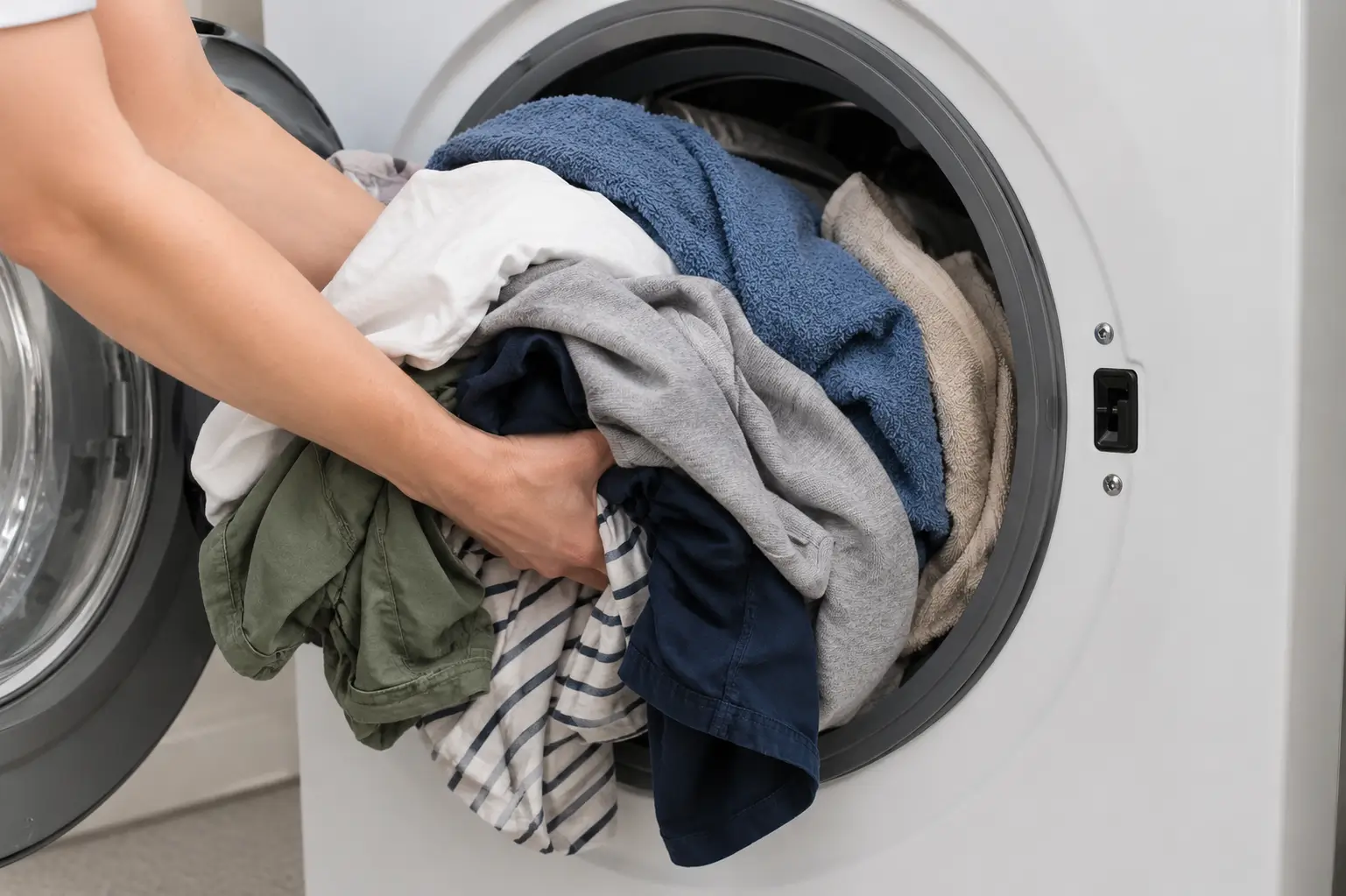
Is your laundry routine actually fading your clothes, or is the fabric just wearing out? Usually it's the routine. Heat, agitation, harsh detergent, sunlight, and hard water all weaken dye bonds a little at a time, and most people run two or three of these forces every single wash without realizing it.
Here are the seven specific habits worth checking, starting with the one doing the most damage.
You may still follow the rule that hotter water always cleans better. But extra heat can quietly pull color from your clothes faster than necessary.
What is happening?
Make this small switch:
The takeaway: Cold water handles most everyday loads while helping colors last longer. Change the temperature setting, and you may see less fading without changing your routine.
Cold water protects color in the washer, but your dryer can undo that work. High heat and tumbling rub the fabric surface, making dark clothes look dull faster.
Check the evidence:
Make this small switch:
The takeaway: Your dryer does more than remove moisture. Lowering the heat and shortening the drying time can help your clothes hold their color without adding work to your routine.
More detergent feels like the answer to dirt, sweat, and odors. Yet pouring extra can leave residue that makes colored clothes look dull instead of clean.
Follow the clues:
Make this small switch:
The takeaway: Modern detergents are often concentrated, so a small amount can handle a regular load. Careful measuring reduces residue, extra rinsing, and unnecessary wear on your clothes.
Changed your routine but still see fast fading? Hard water may be the hidden problem.
Look for these clues:
Hard water contains minerals that can weaken detergent performance and leave deposits on fabric. That dull coating can resemble fading and tempt you to add more detergent, creating more buildup.
Make this small switch:
The takeaway: If you cannot control the water, send valuable or delicate pieces to a professional cleaner instead of testing them at home.
This cause hides in plain sight, because it happens after the wash, so you never blame it. UV light breaks down dye chemically, and wet fabric absorbs UV faster because moisture pulls it deeper into the material. One sunny afternoon drying dark cotton or denim on a clothesline can fade it more than five or ten hot washes combined.
If you air-dry outside to protect your clothes from the dryer, direct sun can undo that effort in a single session. Keep the airflow, lose the UV: dry indoors near a window, or under a covered porch. Turn dark garments inside out before hanging them, so the sun hits the inner surface instead of the outer.
Air-drying still beats the dryer. Just keep it out of direct light.
Your washer's normal cycle may do more work than lightly worn clothes need. Extra washing, spinning, and rubbing can wear fabric and fade color sooner.
Check your habit:
Make this small switch:
The takeaway: Match the cycle to the soil level, not your usual button. A shorter, gentler wash can clean everyday clothes while reducing wear and fading.
Not every fading problem starts in your laundry room. Sometimes the garment's dye does not hold well through repeated washing.
Look for these clues:
Make this small adjustment:
The takeaway: You cannot stop weak dye from fading completely. You can slow the change, protect other clothes from color transfer, and stop blaming your routine when one problem garment behaves differently from everything else.
Put together these fixes and your new routine looks like this:
None of these changes is dramatic on its own. Done together and consistently, they can triple how long your saturated colors hold up. You'll see it gradually: a black shirt still black at wash fifty instead of charcoal by wash twenty, jeans that keep their indigo instead of going pale at the knees by the end of the season.
Some pieces deserve more caution than your home routine (even careful) can realistically give them. A dark suit you wear to every important meeting. A hand-dyed silk dress. A designer top you've already had tailored twice, because you're not letting it go.
For those garments, a professional laundry service does at scale exactly what you just read how to do by hand. Water gets filtered or softened before it touches the fabric, solving the hard water problem entirely. Detergent gets measured per load instead of eyeballed. Temperatures stay precise instead of approximated on a three-setting dial.
Your own routine changes will carry most of your wardrobe. For the pieces you can't afford to lose color on, though, professional handling closes the gap home washing can't, no matter how carefully you follow the fixes above.
You now know why your clothes are fading faster than they should, and you know the fixes. But for the pieces that matter most, don't leave color retention to chance. Swiss Dry Cleaners offers Wash and Fold Laundry Service in Dallas, Texas built on the exact principles in this guide: filtered, softened water, detergent measured to the load, and precisely controlled temperatures that protect color wash after wash.
Schedule your complimentary Pickup and Delivery Service and let Swiss Dry Cleaners handle your next load from your doorstep. Your favorites deserve better than a guess.
Address: 3030 Mockingbird Lane, Dallas, TX, 75205
Phone: 469-727-2975
Attended Hours: Monday to Friday, 8:00 a.m. to 4:00 p.m.
Self-Service Kiosk: Open 24/7
Schedule Online: Book Complimentary Pickup and Delivery Service